University of Toronto at Scarborough
 
publications
 
Get Adobe Acrobat Reader!

Page: 2  3
The Global Fate of Persistent Contaminants
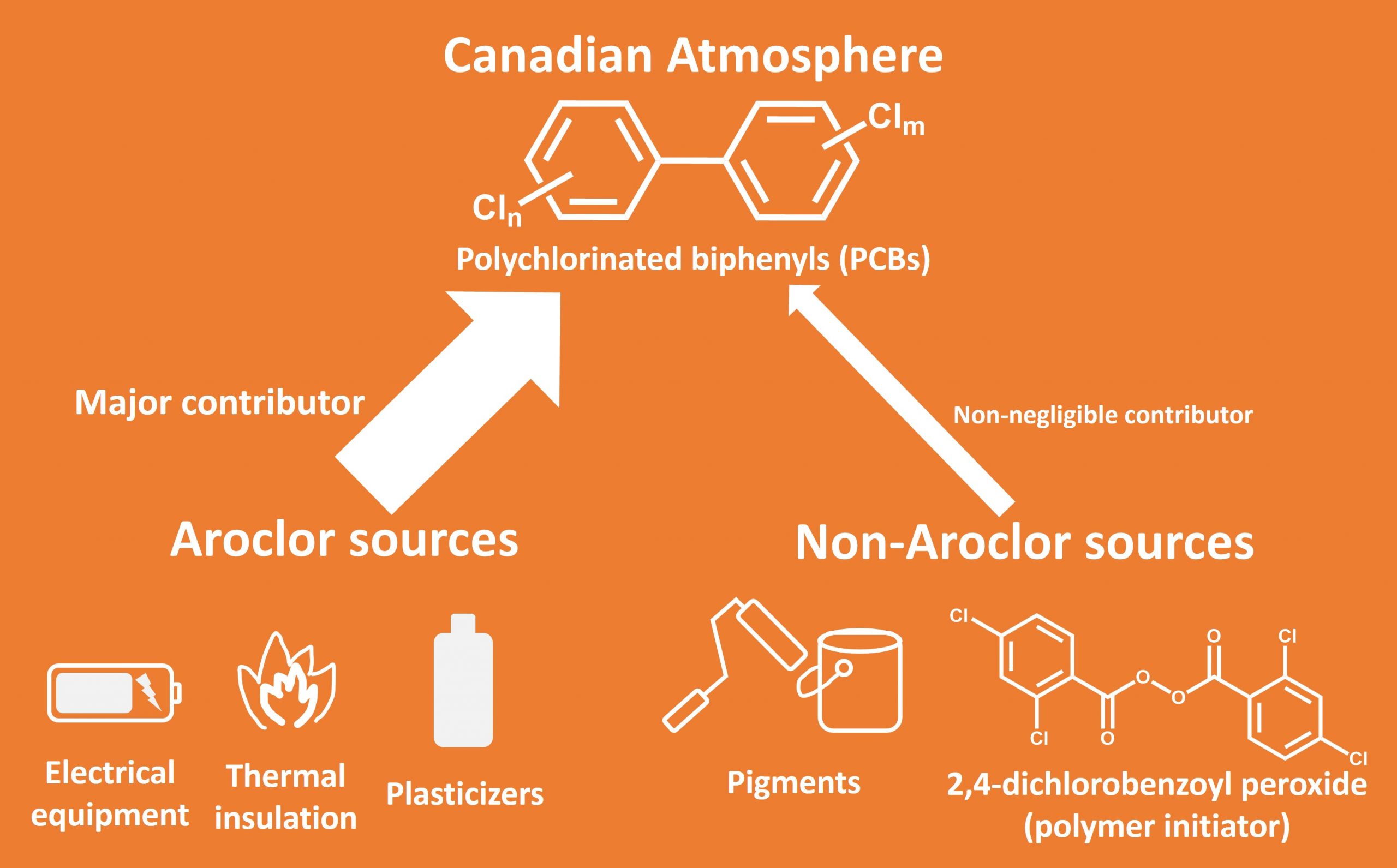
The presence of persistent, anthropogenic compounds in remote areas such as the Arctic has resulted in considerable interest in their global transport and accumulation behaviour. Our work aims at an improved conceptual understanding and quantification of the processes involved in the global dispersion of these chemicals. In 1993, we put forward the hypothesis of global fractionation and cold condensation for semi-volatile organic compounds, which states that certain characteristics make chemicals prone to preferential deposition and accumulation in cold areas. Chemicals become fractionated latitudinally based on their temperature-controlled atmosphere-surface partitioning characteristics. We are presently developing and testing a passive air sampling technique to probe this hypothesis by mapping the large scale dispersion behaviour of persistent contaminants across Canada. We are further developing and using zonally averaged global computer models to simulate the long term fate of persistent organic chemicals, such as organochlorine pesticides and the polychlorinated biphenyls.


   All materials contained herein © Frank Wania, University of Toronto, 2000.